Boulder Retaining Walls
- Heavy stone walls that hold steep ground
- A rugged look that fits rural property
- Built to stand up to weather and runoff

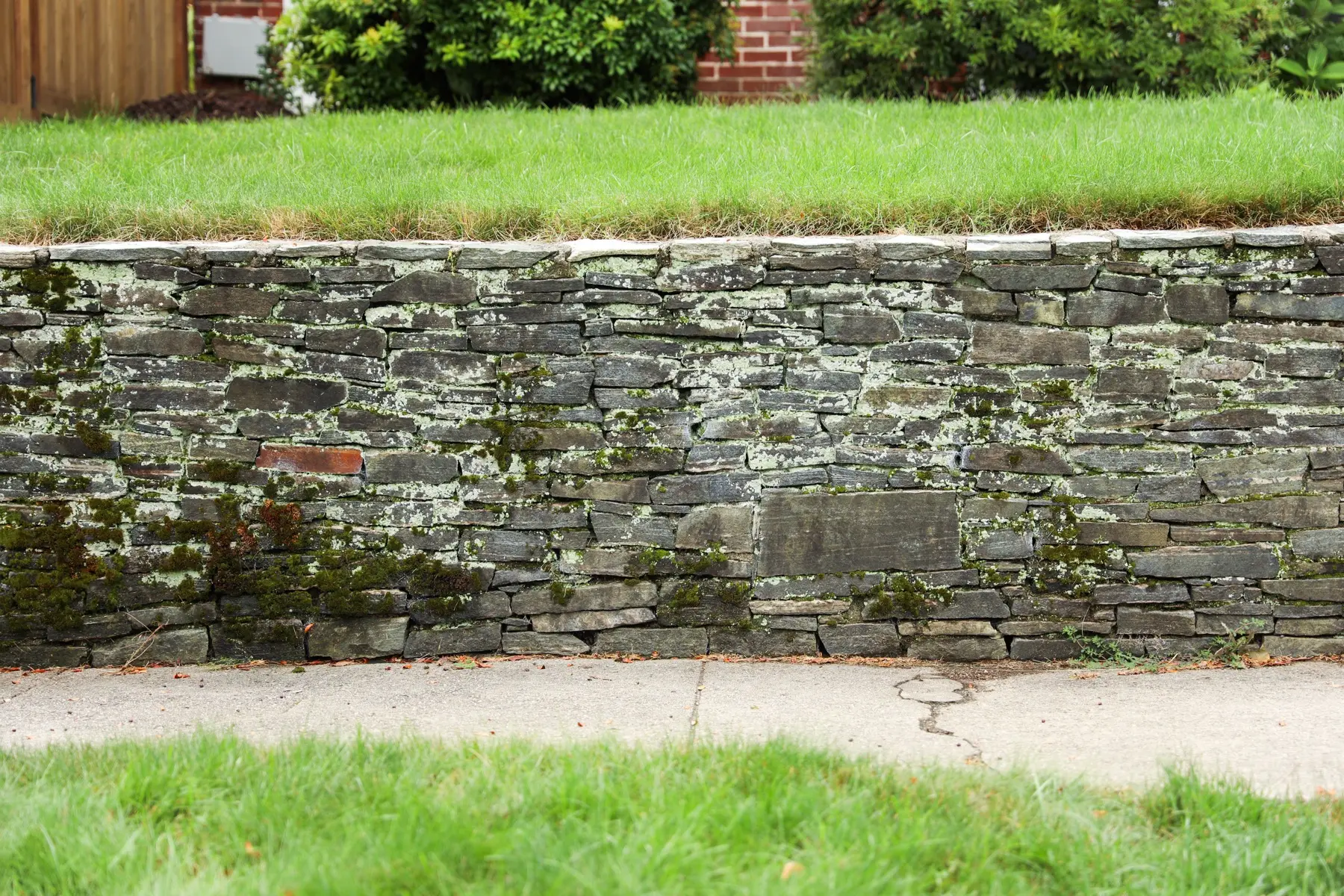
CG Dirt Work and More builds boulder and block retaining walls across Cleveland, Sand Springs, and the sloped terrain of Pawnee, Osage, Tulsa, and Rogers County. A retaining wall has one job: hold ground in place and keep water from carrying your property downhill. Build it without accounting for the water behind it and it leans, bulges, and fails. We build them to hold.
The right wall depends on the slope, the soil, and what you are trying to protect. Here is the retaining wall work we handle across northeast Oklahoma.
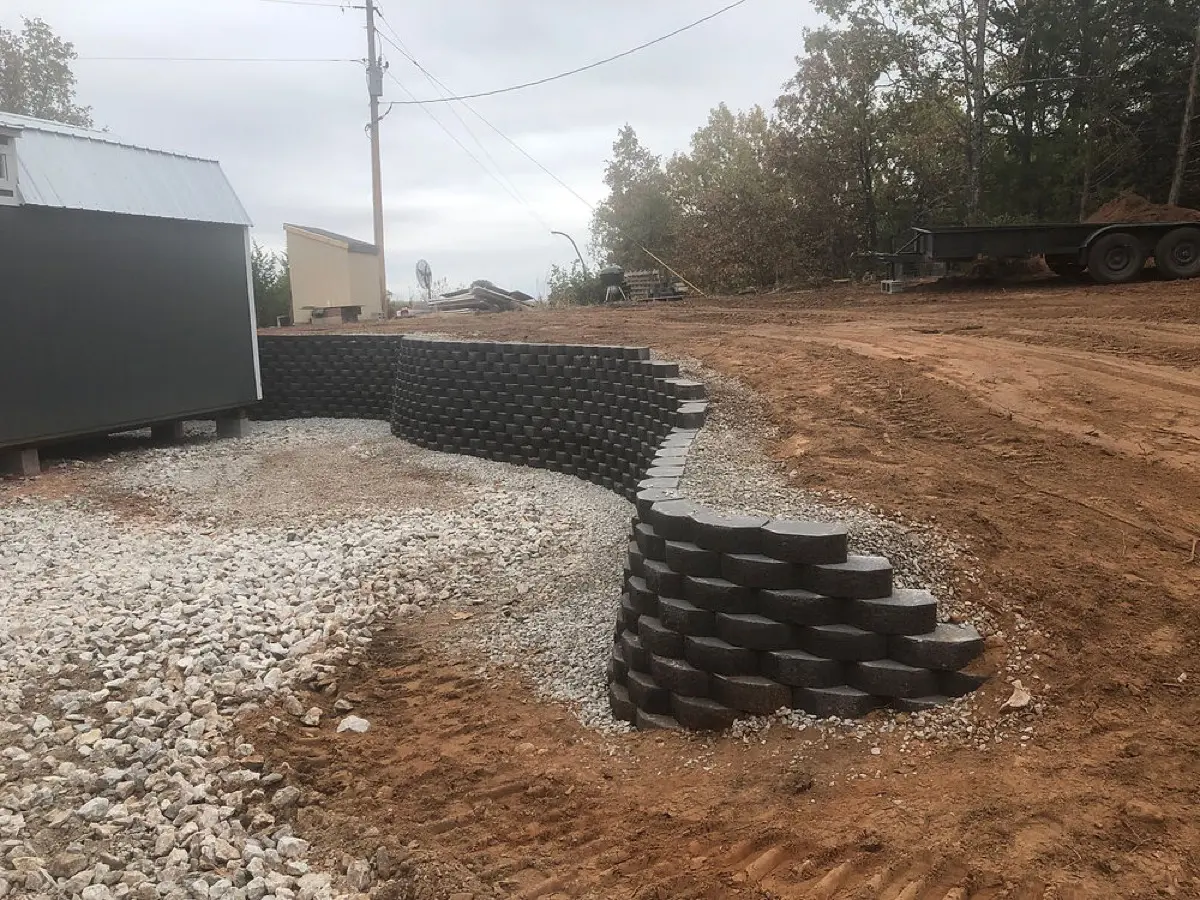
Most of what makes a retaining wall last is hidden once the job is done. The base it sits on, the drainage behind it, and the way water is handled are what hold a wall in place. We studied how soil and water move on a piece of land, and that goes into the wall before the first stone is set.
A wall is only as good as the work underneath it. Here is what goes into one built to hold.
Reading the grade, the soil, and where the water runs so the wall is built for the load it carries.
Excavating and setting a level, compacted base so the wall has solid footing from the start.
Putting drainage behind the wall so water moves off instead of building up and pushing it out.
Setting the stone or block, then backfilling so the ground behind holds and drains the right way.
A retaining wall is one of those jobs where cutting corners shows up later, usually after a hard rain. Doing it right means it holds for years.
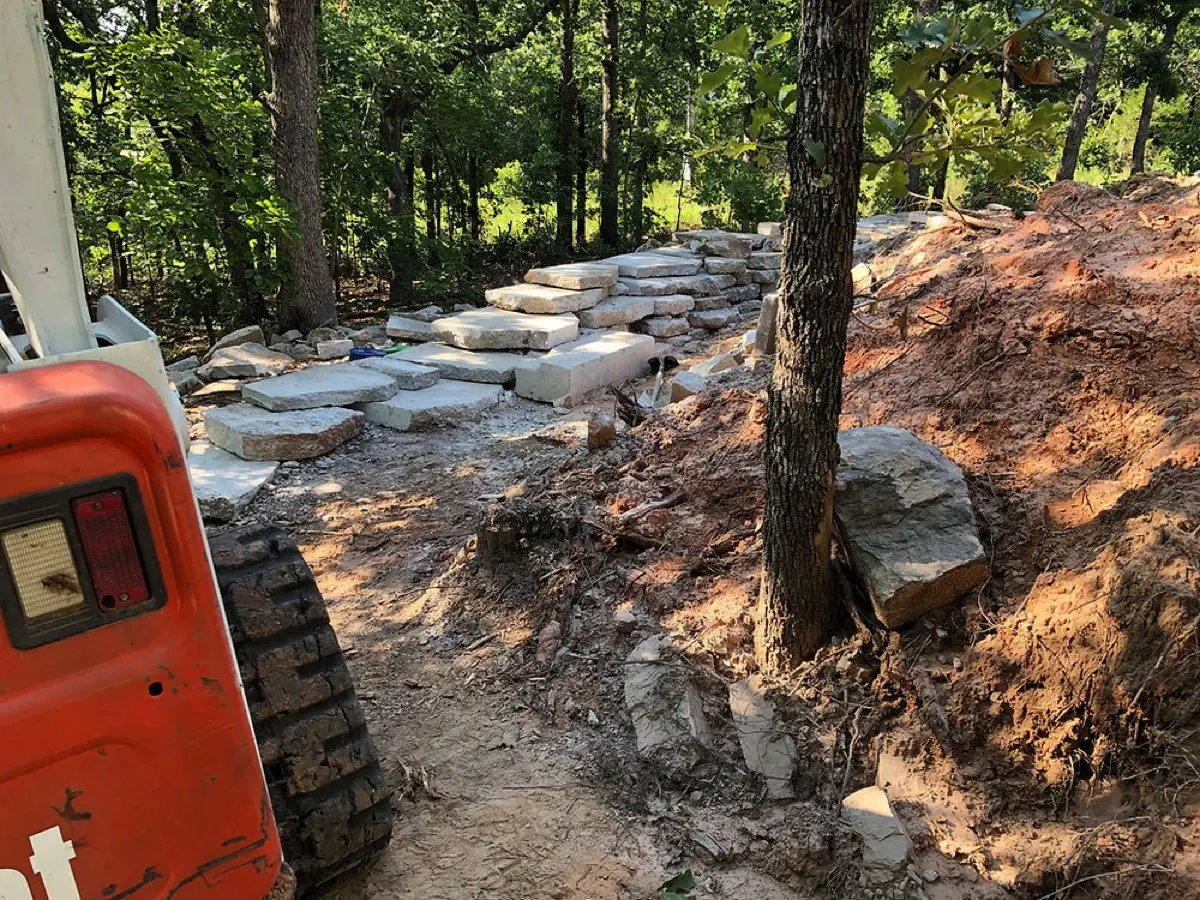
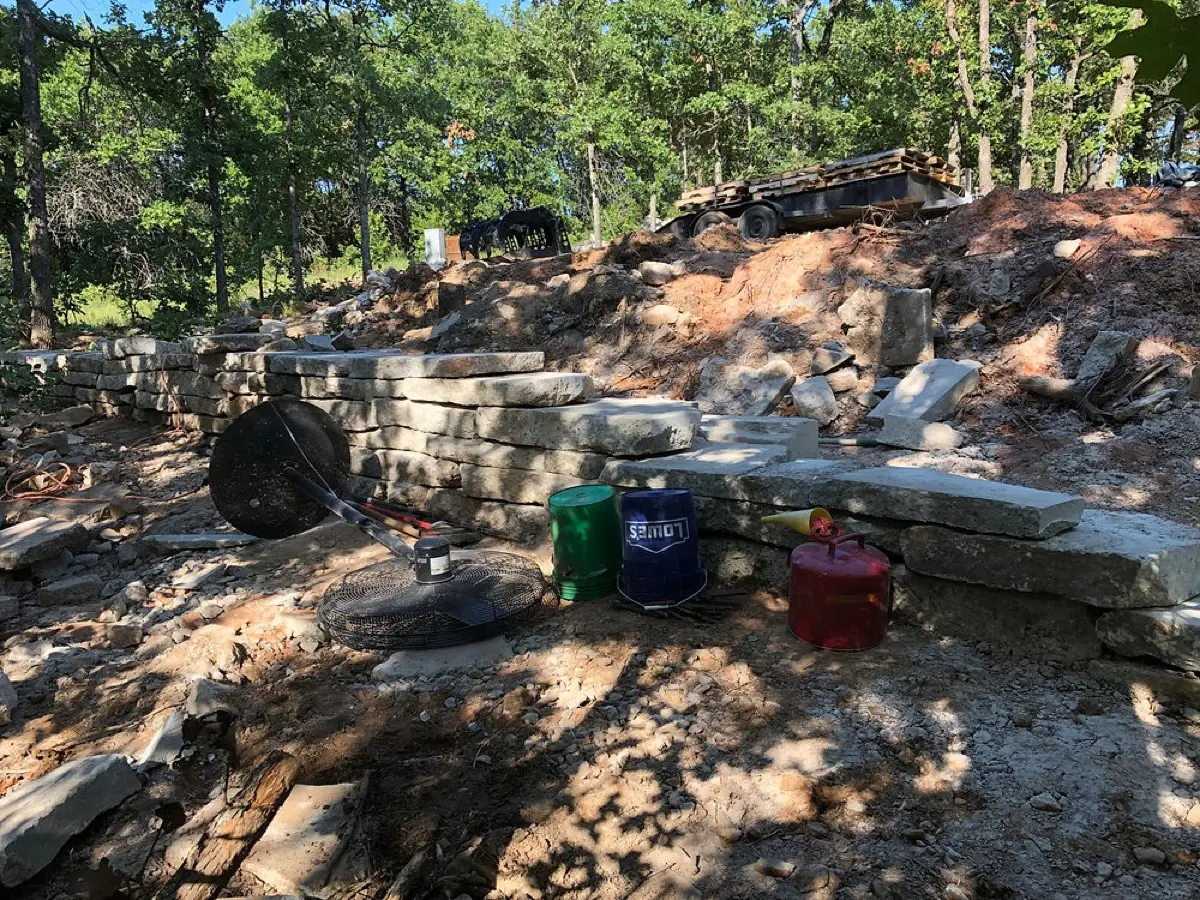
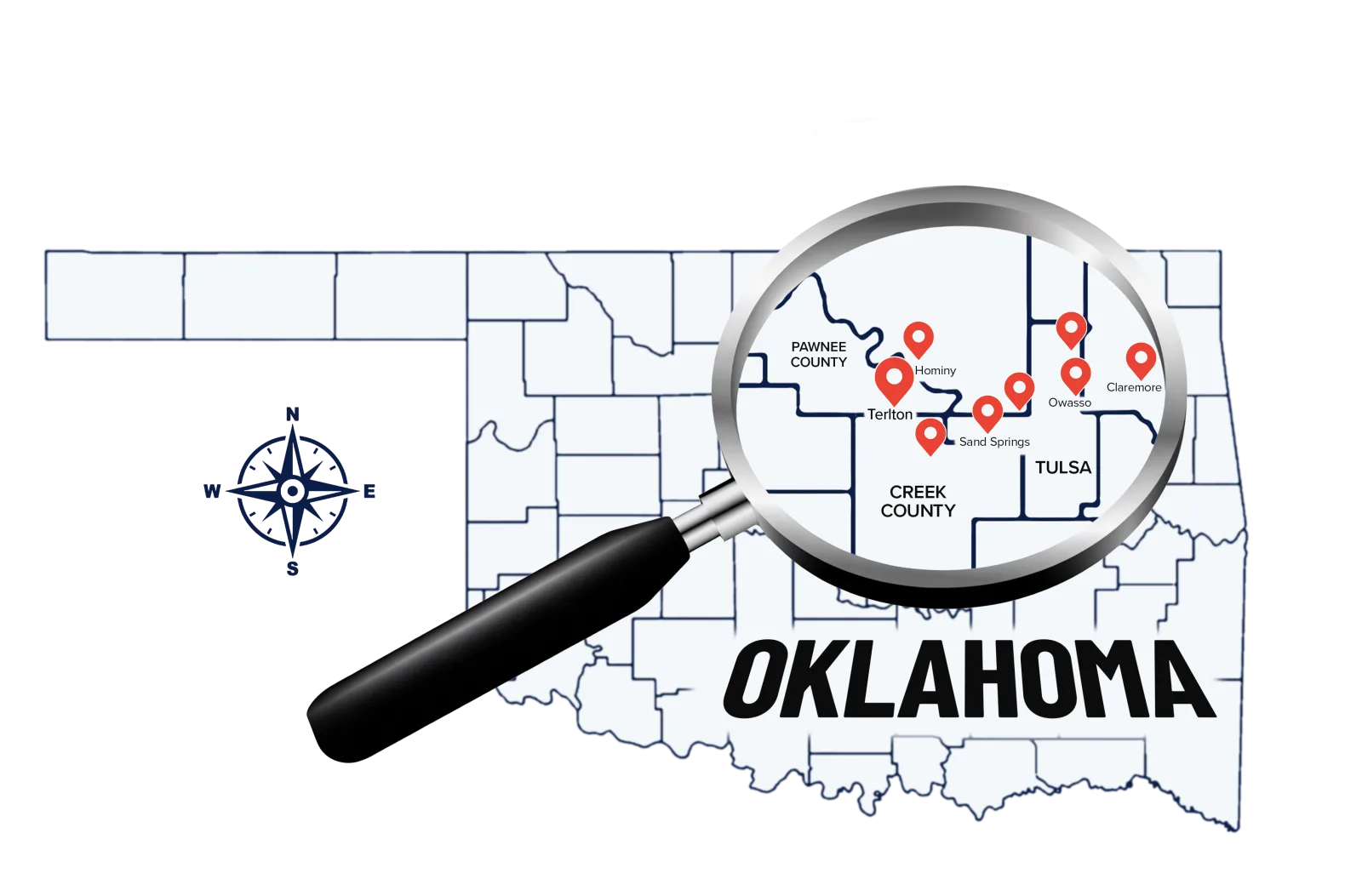
We build retaining walls on sloped and eroding ground throughout Pawnee, Osage, Tulsa, and Rogers County, from right around Terlton out to the communities around Tulsa.
Straight answers to the questions we hear most from property owners dealing with slopes, erosion, and ground that will not stay put.
The cost of a retaining wall depends on its length and height, the material, the slope it has to hold, and how much site and drainage work the ground needs. A short decorative wall is a very different job from a tall wall holding back a steep grade or an eroding creek bank. What matters more than the number is what goes into it, since a cheap wall built without proper drainage and a solid base usually fails and costs more to redo. We build boulder and block retaining walls across the Tulsa metro and northeast Oklahoma and give you a clear estimate after we look at the site.
It comes down to the slope, the soil, and what you want it to look like. Boulder walls handle rugged, rural ground well and stand up to weather and runoff, while segmental block gives a cleaner, finished look for yards and graded areas. Both hold ground when they are built on a proper base with drainage behind them. We work with the terrain across Pawnee, Osage, Tulsa, and Rogers County and match the wall to what your property actually needs.
Erosion is a water problem first. Once runoff finds a path down a slope or along a bank, it cuts in deeper every season until the ground gives way. A retaining wall, combined with the right grading and drainage, holds that soil in place and controls where the water goes. We build erosion control and creek bank stabilization walls throughout northeast Oklahoma built to slow the damage and lock the ground down.
Yes, and it is the single most important part of a wall that lasts. Water that collects behind a wall with nowhere to go builds pressure until it pushes the wall out or knocks it over. Proper drainage behind the wall gives that water a path off your property instead of letting it work against the wall. It is one of the main reasons a wall built right outlasts one built cheap.
We are based in Terlton and build retaining walls throughout Pawnee, Osage, Tulsa, and Rogers County, including Owasso, Collinsville, Sperry, Claremore, and the rural acreage around them. If your property sits within about an hour of Terlton and has a slope, a bank, or erosion you need held back, give us a call.
Tell us what the slope looks like and what you are trying to protect, and you will get a straight answer about the wall it takes to hold it.